In Malaysia's tropical climate, where temperatures are constantly above 30°C, the combination of high humidity, intense UV rays, and frequent switching between outdoor heat and air-conditioned rooms can be brutal. Many people find themselves stuck in a frustrating cycle of being either super oily or dry and flaky. You might be wondering—why do popular skincare products seem to make things worse instead of better? The truth is, the problem isn't the products; it's that you haven't identified your true skin type!
As a homegrown brand deeply rooted in the Malaysian skincare market, we at POPASKIN get asked every day: "Am I actually dry or oily?" and "Why does my skin get even oilier or drier here in Malaysia?"
Today, we're clearing up the confusion once and for all. We'll teach you 3 simple steps to quickly distinguish between dry and oily skin, and provide a tailored skincare routine suited to Malaysia's unique climate. Whether you're dry or oily, let's get you on the path to clear, healthy skin! ✨
Table of Contents
Step 1: 3 Quick Tests to Tell Dry vs. Oily Skin in 1 Minute (Malaysia Edition)
Malaysia's high humidity can be tricky—it often makes people confuse "oily skin" with "dehydrated skin" (oily on the outside, dry on the inside). It can even cause dry skin to produce "fake oil" when constantly exposed to air-conditioning. Here are 3 simple and easy tests you can do at home to accurately identify your skin type—no need to visit a beauty salon!
Test 1: The Morning Cleanse Test
Wash your face with a gentle amino acid cleanser (avoid soap-based ones to prevent skewing the results). Gently pat your face dry with a clean towel, then do not apply any skincare products. Wait for 1-2 hours and observe your skin's condition:
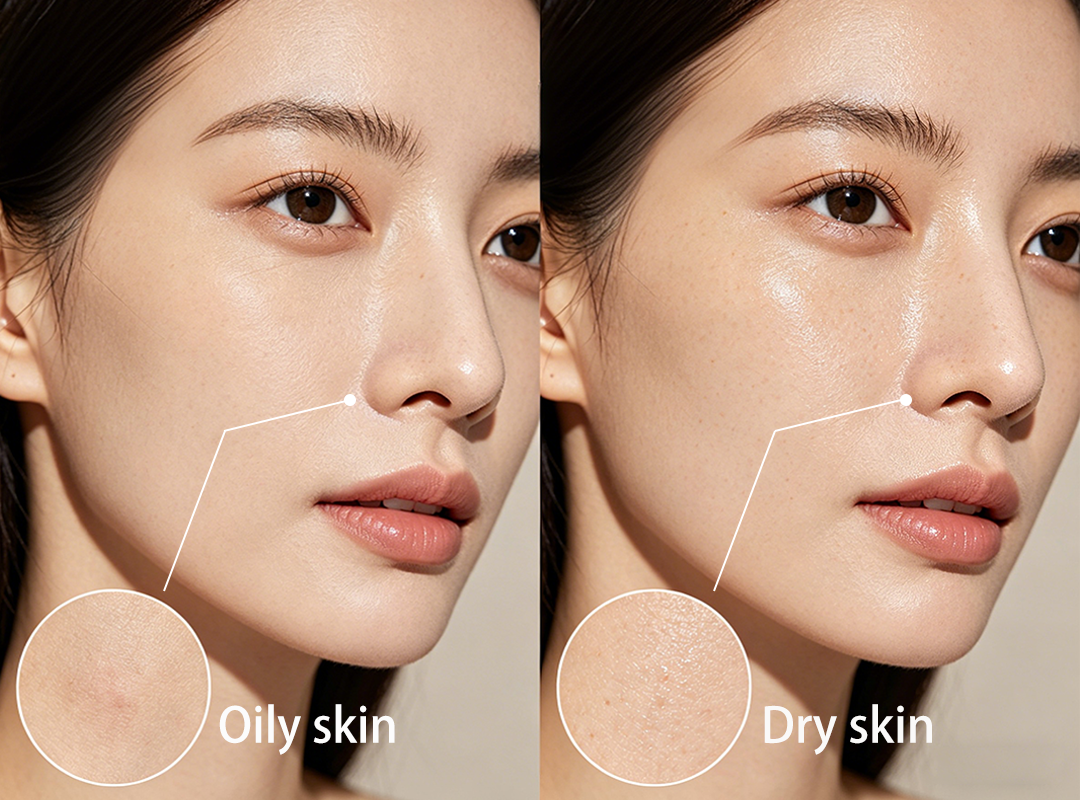
- Oily Skin: Your entire face looks shiny, especially the forehead and nose wings (T-zone), which may have visible oil creases. Blotting paper picks up a large amount of oil, and your skin might feel sticky with visibly enlarged pores.
- Dry Skin: Your whole face feels tight and dry. You might notice tiny flakes on your cheeks, corners of the mouth, or even around the eyes. There is absolutely no shine, and your skin feels rough or even slightly stinging to the touch.
Test 2: The Blotting Paper Test
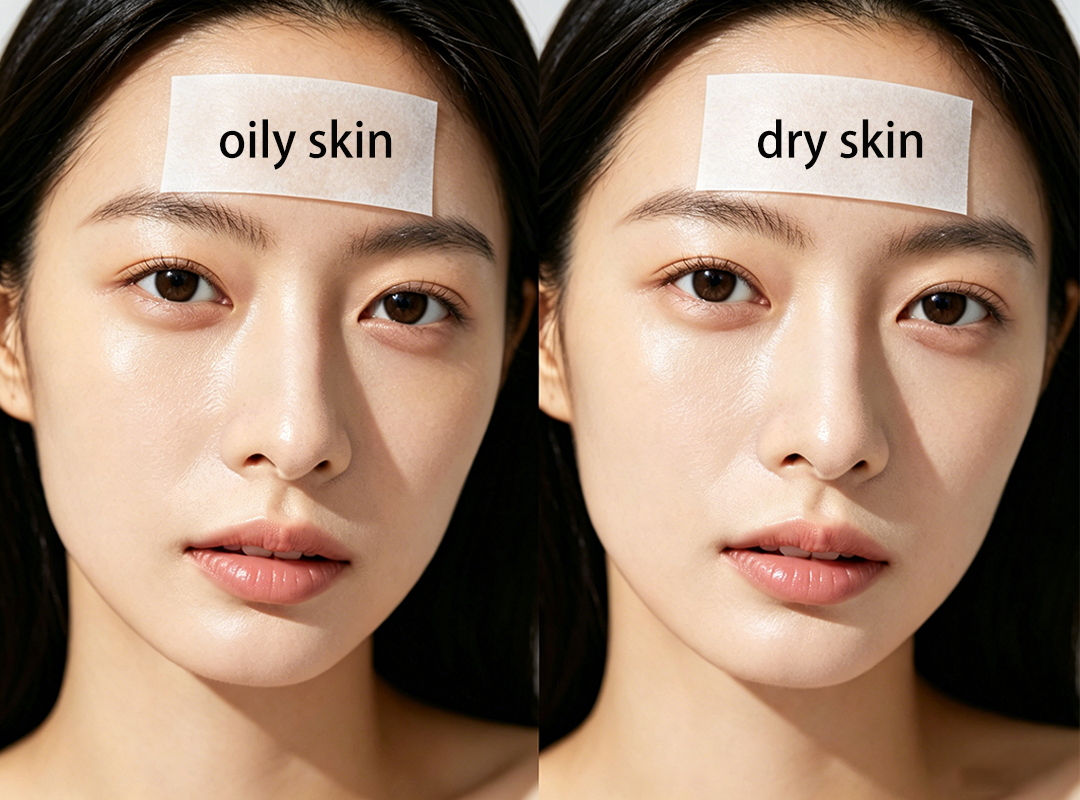
When you wake up in the morning, do not wash your face. Take a piece of blotting paper and press it separately on your T-zone (forehead, nose) and U-zone (cheeks, chin) to check for oil:
- Oily Skin: The blotting paper is covered in oil from both the T-zone and U-zone, with the T-zone showing particularly obvious oil marks.
- Dry Skin: The blotting paper picks up almost no oil. In fact, it might feel like the paper is just sticking or dragging on your face.
Test 3: The Makeup Test
Apply your regular foundation or base makeup and observe how it looks after 4 hours:
- Oily Skin: Your makeup slides off seriously or looks cakey. The T-zone gets oily and oxidized, creating a "mask-like" appearance. You might even notice clogged pores or breakouts.
- Dry Skin: Your makeup gets patchy and uneven, especially on the cheeks and around the smile lines (nasolabial folds). Flaking is obvious, making the skin look dry and dull.
Step 2: Dry vs. Oily Skin – The Core Differences
Now that you've identified your skin type, it's time to understand the core pain points of each. In Malaysia's tropical climate and high humidity, the struggles of dry and oily skin are quite different from other regions. Only by pinpointing these specific issues can you truly tailor your skincare routine.
✨ Dry Skin: Lacking Oil & Water, Vulnerable to Air-Con & UV Rays
The main issue for dry skin is underactive sebaceous glands, a weak skin barrier, and poor moisture retention. In Malaysia's environment, the primary struggles are:
- Spending long hours in air-conditioned rooms (offices, malls, cars) causes rapid moisture loss, making the skin even drier, tighter, and prone to redness or stinging.
- Intense UV exposure easily leads to dryness and flaking, as well as the formation of dry lines and fine wrinkles, especially around the eyes and smile lines.
- Low oil production means fine pores, but the skin is highly sensitive. Seasonal changes or irritating ingredients can easily trigger redness and peeling.
- Makeup tends to look cakey, patchy, and uneven. Even with moisturizing foundations, it's hard to achieve a long-lasting finish.
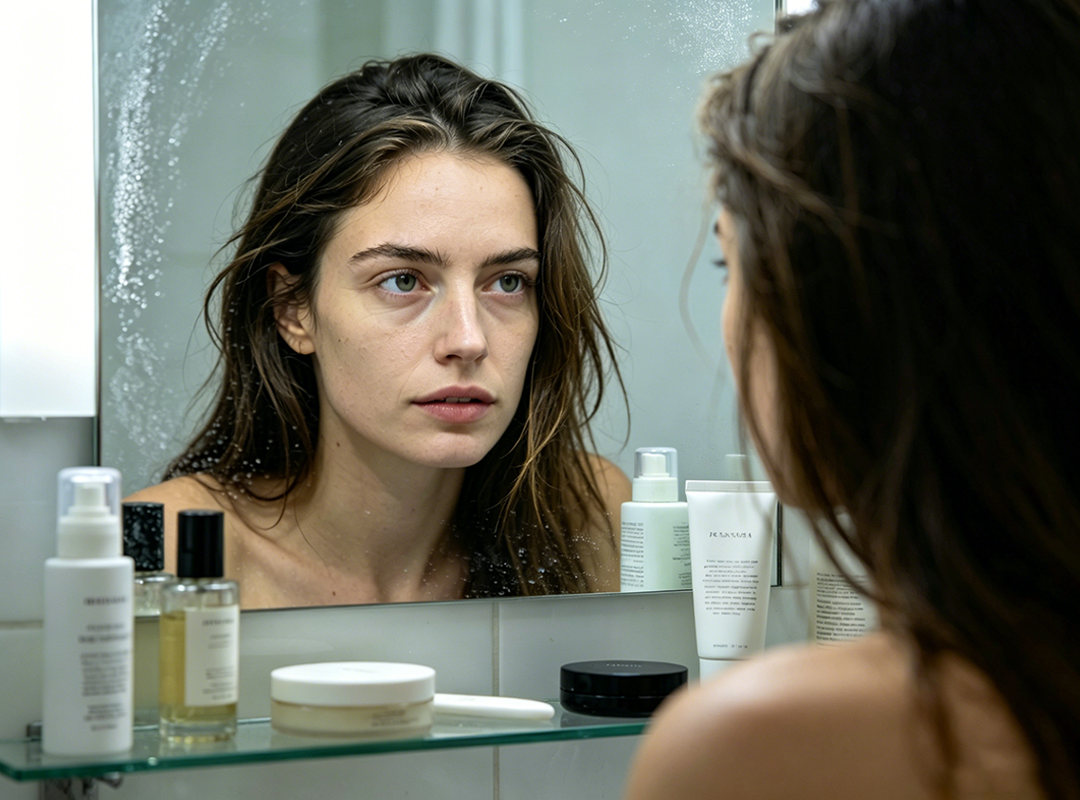
✨ Oily Skin: Excess Oil, Dehydrated, Vulnerable to Heat & Breakouts
The core issue for oily skin is overactive sebaceous glands and excessive oil production. Malaysia's high humidity and heat only amplify these problems:
- High heat and humidity stimulate oil glands, leaving you with a shiny face in the morning and a severely oily T-zone by the afternoon—sometimes oily enough to "fry an egg"!
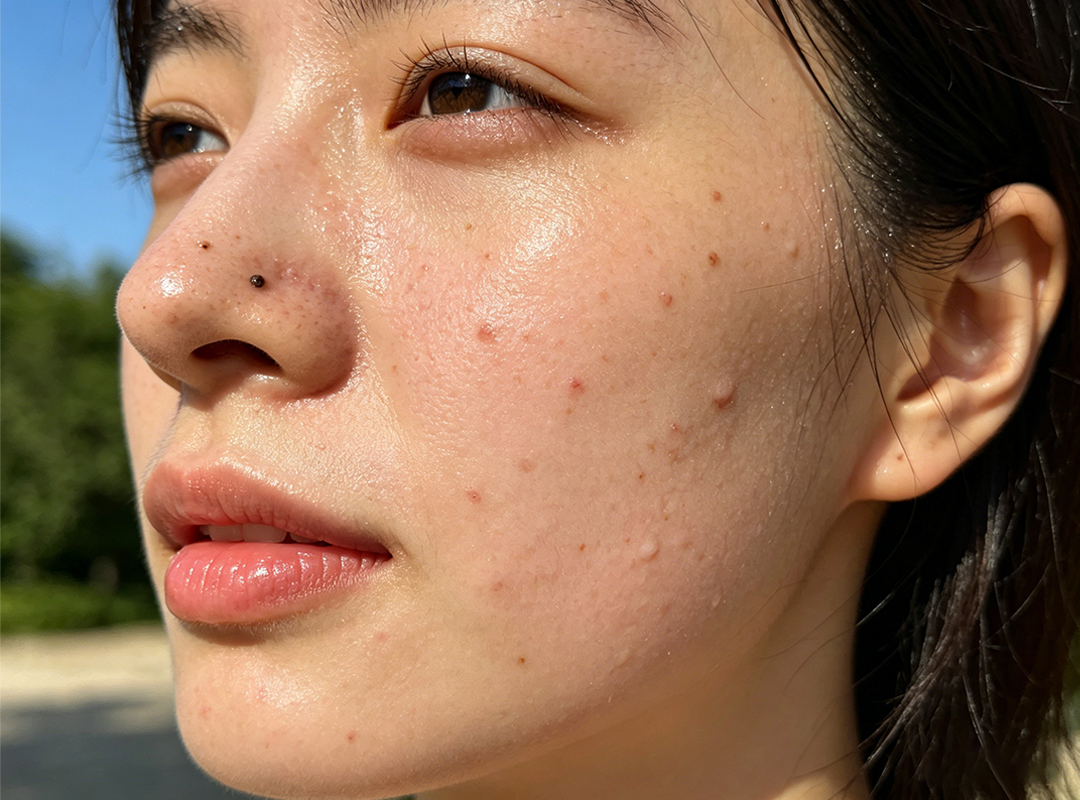
- Enlarged pores easily trap dirt, leading to blackheads, whiteheads, and recurring clogged pores or acne, especially on the chin and forehead. Many also suffer from inflammatory acne.
- The skin barrier is relatively thick and less sensitive, but over-cleansing can disrupt the water-oil balance, ironically making the skin produce even more oil.
- Makeup tends to slide off or look cakey. As the oil oxidizes, the foundation turns dull and yellowish, with a high risk of clogging pores and causing breakouts.
Step 3: Dry vs. Oily Skin – Tailored Skincare Routines for Malaysia
Remember the core logic: Dry skin needs hydration (hydrate + lock in moisture + repair barrier), while oily skin needs oil control (control oil + hydrate + unclog pores). Considering Malaysia's climate, every step should avoid common pitfalls and target your specific needs.
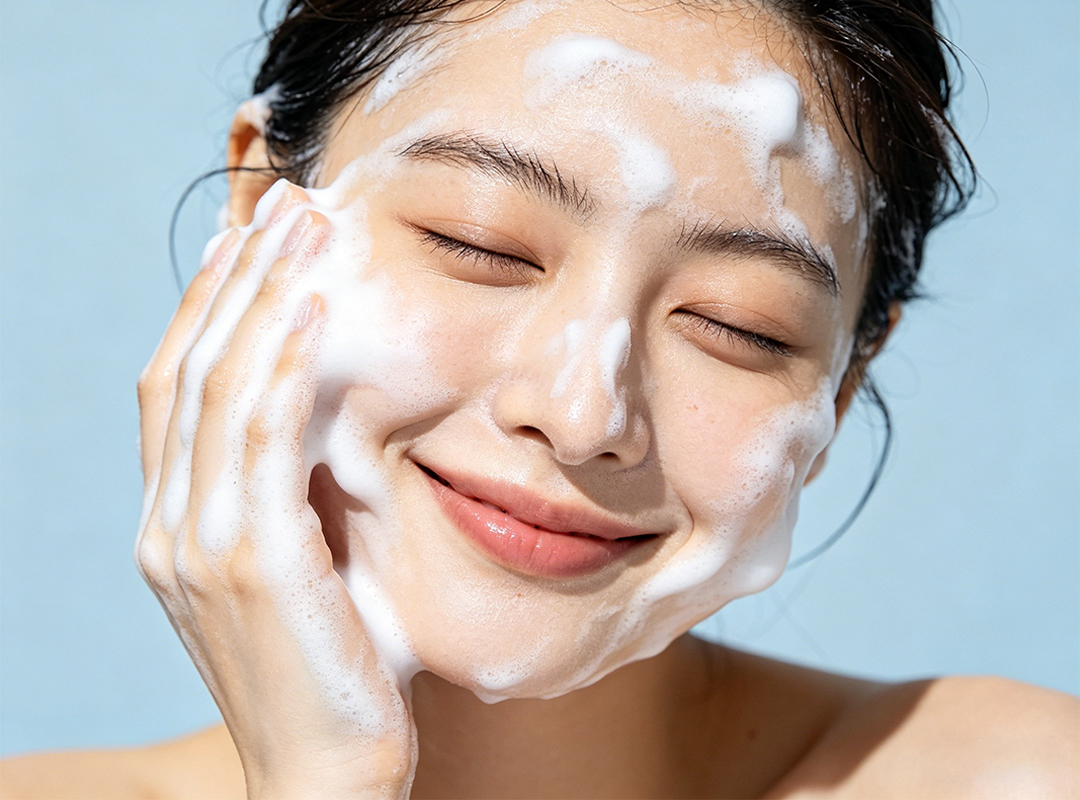
1. Cleansing: Keep it Gentle, Say No to Over-cleansing
In Malaysia's heat, many people fall into the trap of "cleansing too often," which actually damages the skin barrier and does more harm than good.
- Dry Skin: Opt for a gentle amino acid cleanser. It's mild, non-irritating, and preserves the natural oils on your skin's surface.
❌ Pitfall to Avoid: Never use soap-based cleansers. Limit cleansing to once a day (just rinse with water in the morning) to prevent over-cleansing. - Oily Skin: Choose an amino acid blend cleanser. It effectively removes excess oil without harming your skin barrier.
❌ Pitfall to Avoid: Don't use soap-based cleansers frequently. Limit them to 1-2 times a week (only when your skin is extremely oily) to avoid disrupting your water-oil balance.
2. Toner: Hydrate and Soothe, Matched to Your Skin Type
Toner is the "foundation step" for hydration. In Malaysia's environment, picking the right texture and ingredients is crucial.
- Dry Skin: Choose a hydrating toner with ingredients like Hyaluronic Acid, Ceramides, and Panthenol. Look for a richer texture.
✅ Pro Tip: Pat in 2-3 layers to let the moisture fully penetrate and relieve the dryness and stinging caused by air-conditioned rooms. - Oily Skin: Go for a refreshing, oil-control toner with ingredients like Salicylic Acid, Witch Hazel, and Niacinamide.
✅ Pro Tip: Keep a facial mist handy in air-conditioned rooms to hydrate anytime, preventing your skin from producing more oil due to dehydration.
3. Serum: Targeted Care to Solve Core Issues
Serum is the "core step" of skincare. Since dry and oily skin have very different needs, choosing the right serum makes all the difference.
Dry Skin: Focus on hydrating and repairing serums, such as Hyaluronic Acid serum (deep hydration), Ceramide serum (barrier repair), or Squalane serum (locks in moisture). A slightly richer texture is fine.
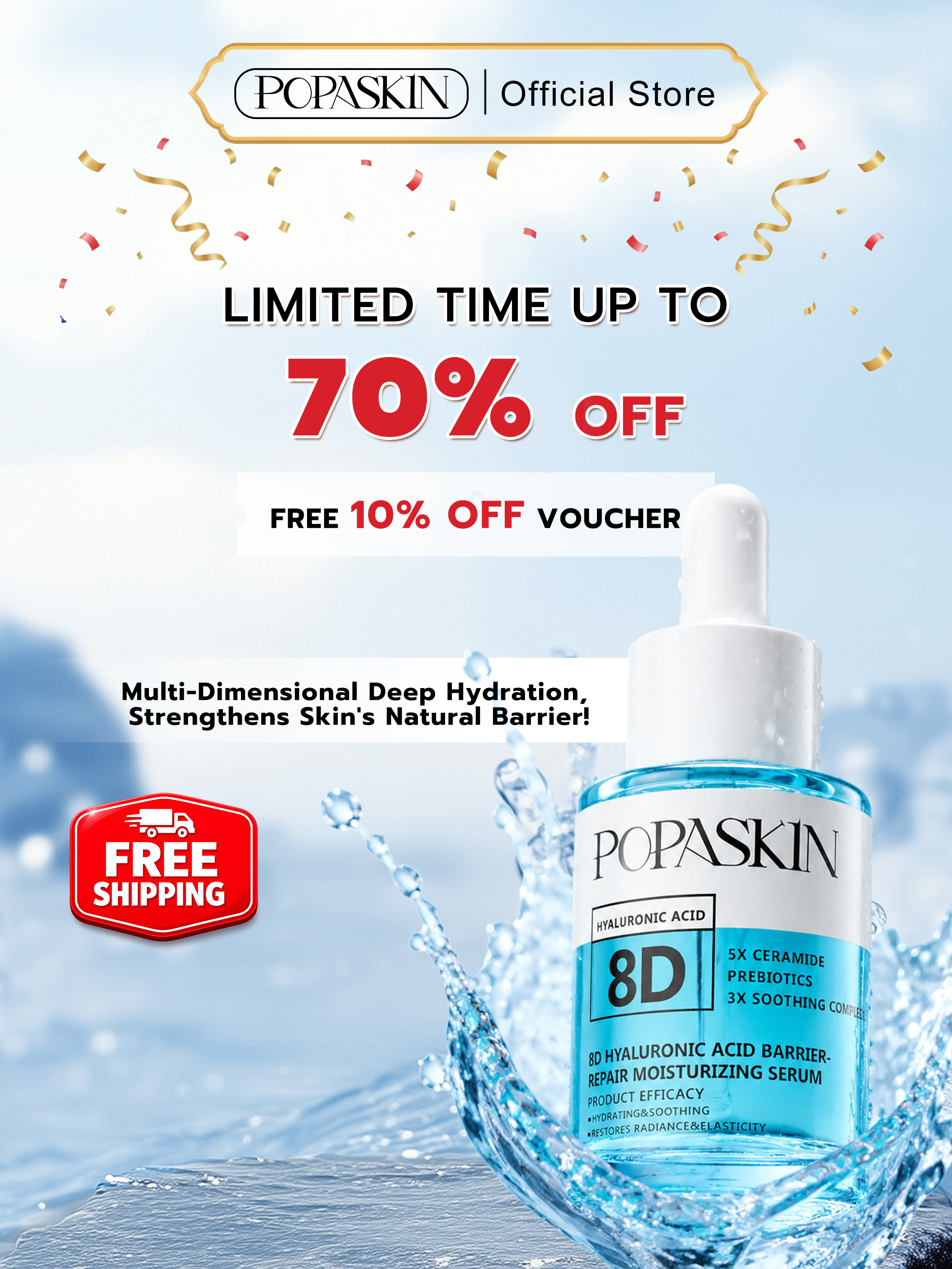
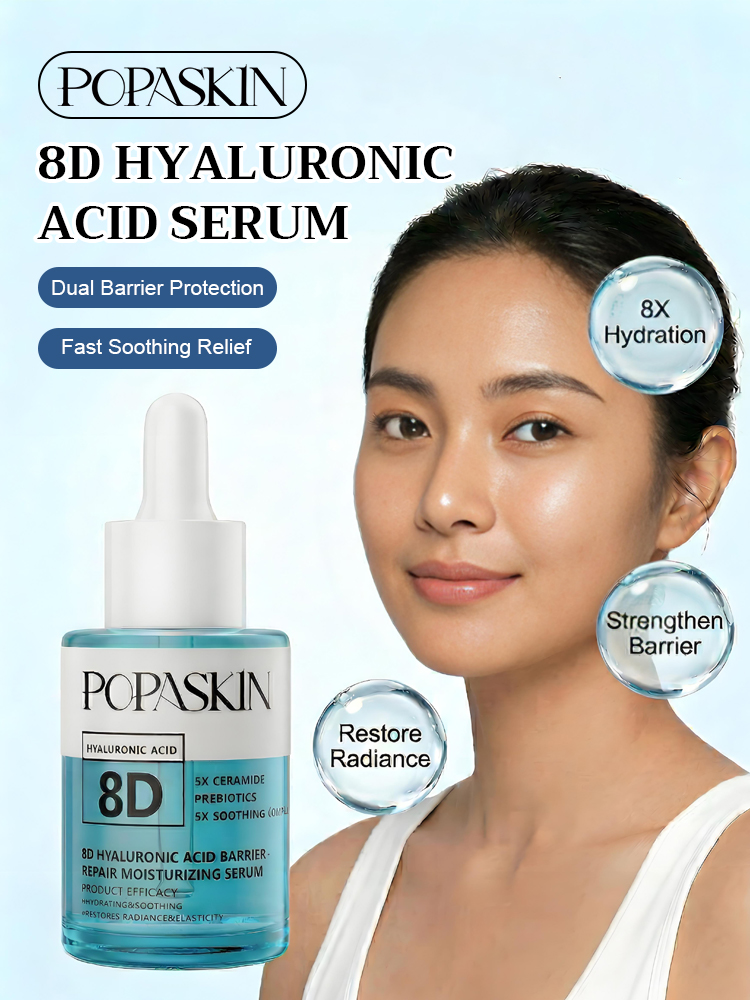
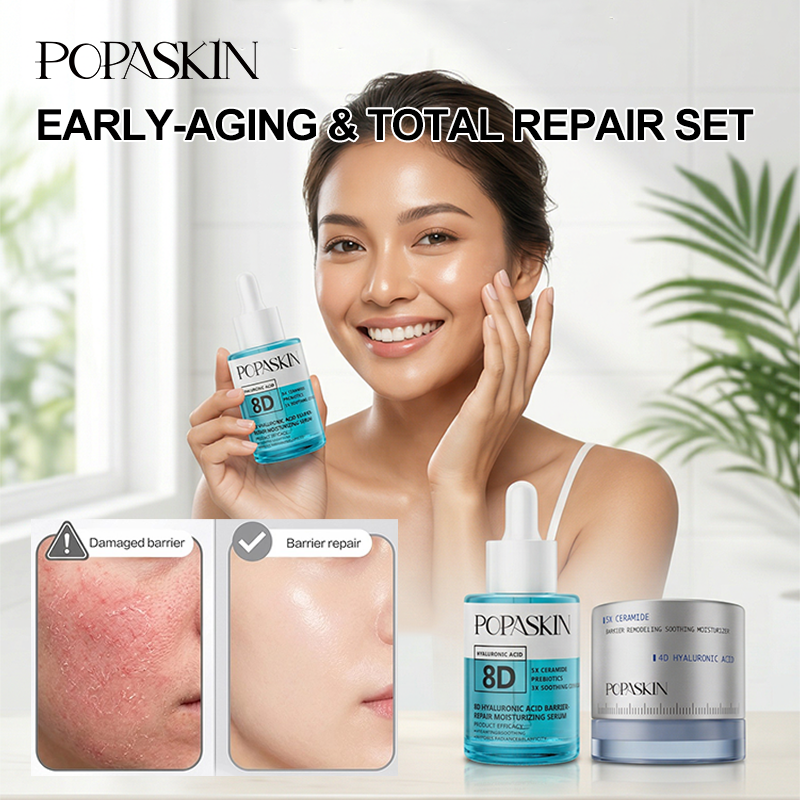
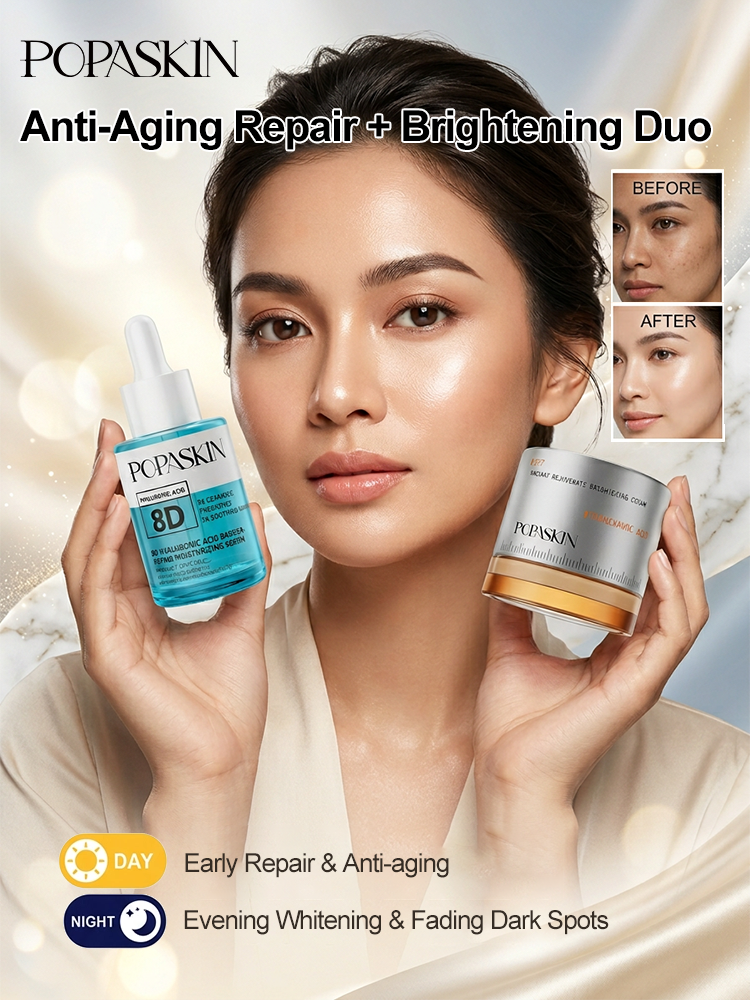
✅ Recommendation: POPASKIN 8D Hyaluronic Acid Moisturizing Serum
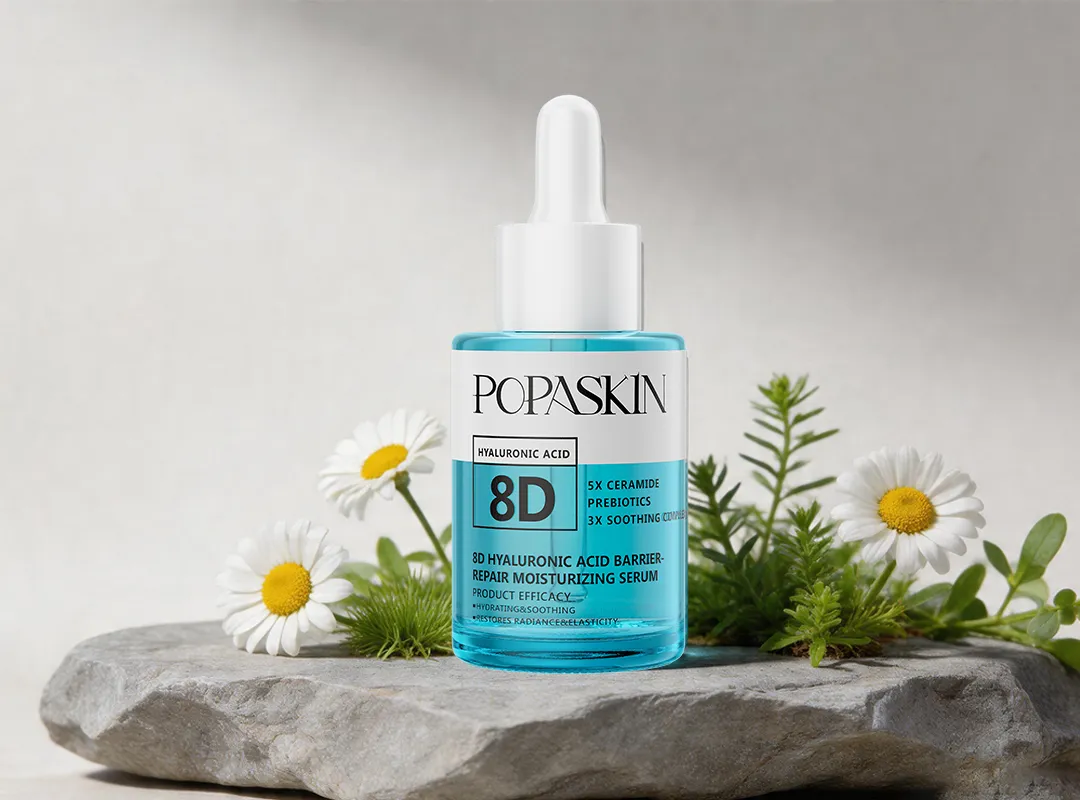
It has a nourishing yet non-sticky texture, perfect for Malaysia's air-conditioned environments. It locks in moisture for the long haul and improves flaky dry skin.
Oily Skin: Focus on oil-control and anti-inflammatory serums, such as Niacinamide serum (oil control + brightening), Salicylic Acid serum (unclogs pores), or Tea Tree serum (anti-inflammatory). The texture must be lightweight.
4. Lotion / Cream: Lock in Moisture & Control Oil, Matched to the Climate
Many people think "oily skin doesn't need cream" or "lotion isn't moisturizing enough for dry skin." However, in Malaysia's climate, the key to choosing a lotion or cream lies in the texture, not just the type.
Dry Skin: Prioritize a cream with a richer texture (but not sticky). It needs strong moisture-locking power, especially in air-conditioned rooms.
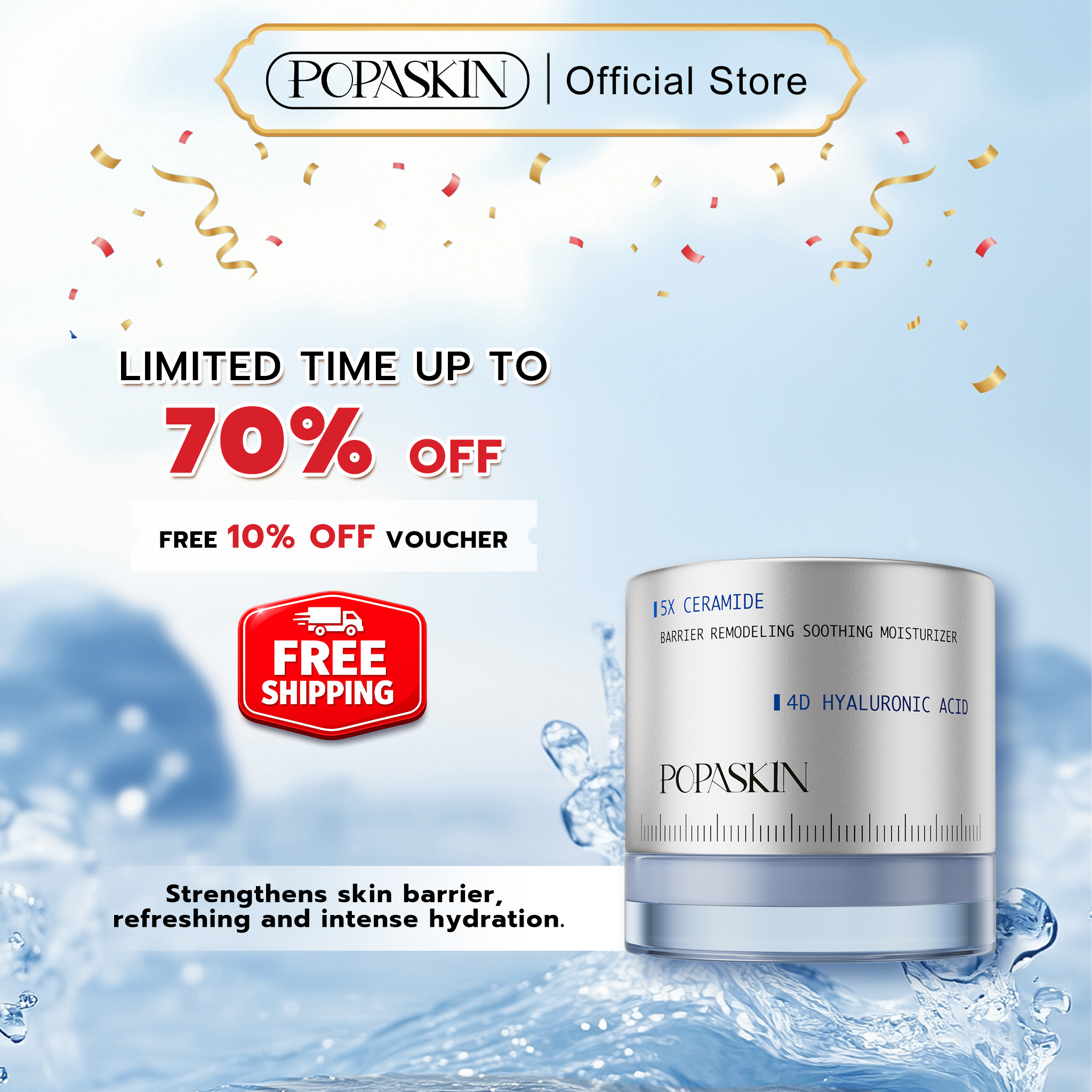
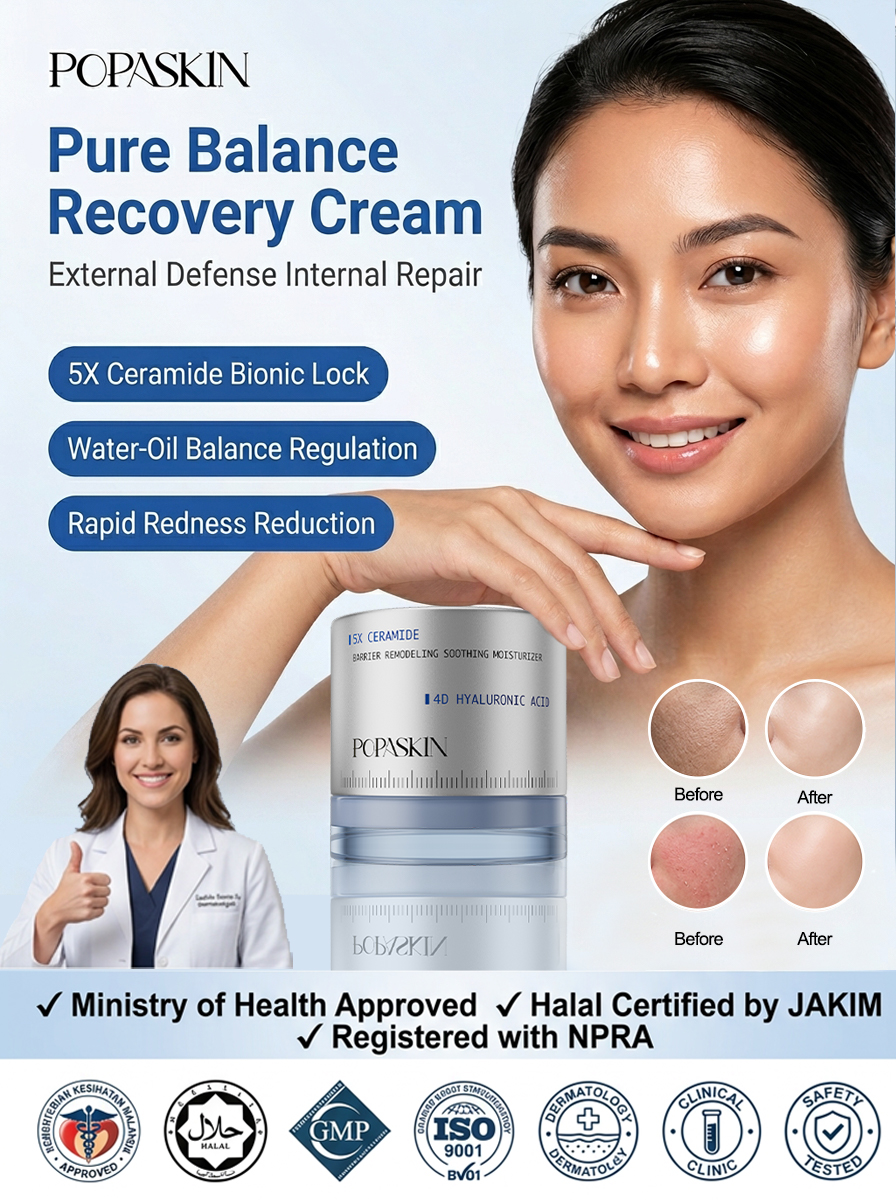
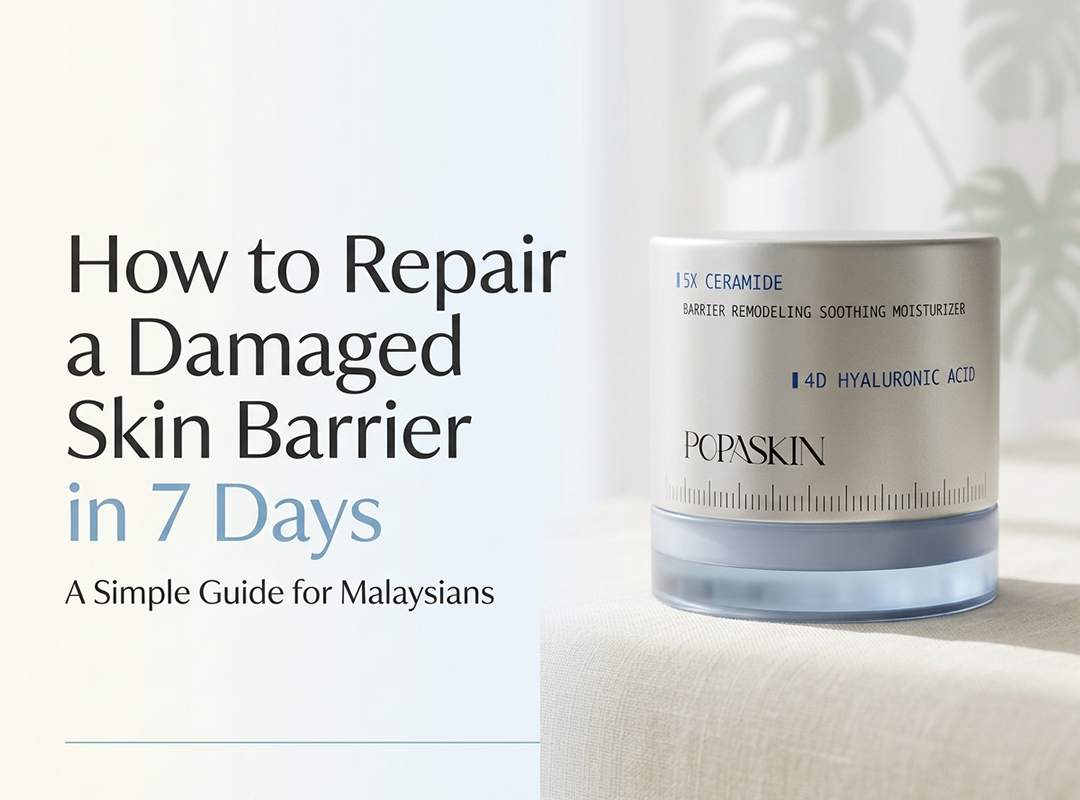
✅ Recommendation: POPASKIN 5X Ceramide Moisturizing & Repairing Cream
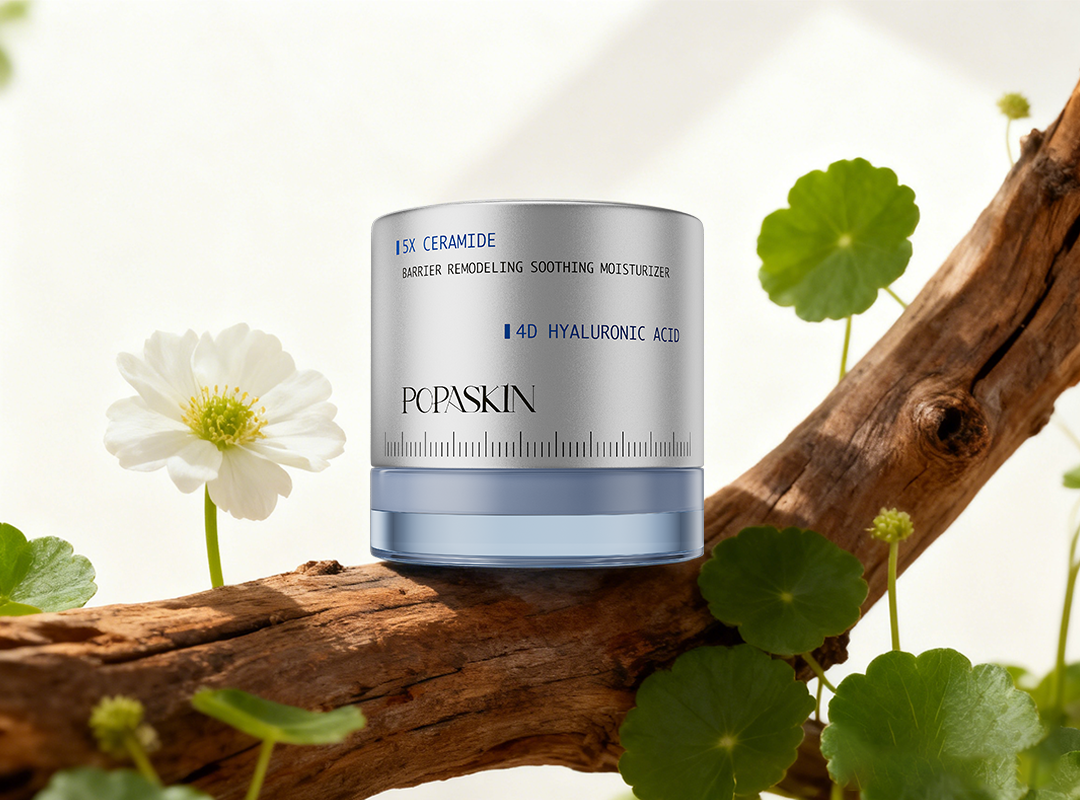
It has a dense, rich texture packed with ceramides to repair the dry skin barrier and lock in moisture long-term, preventing seasonal flaking.
Oily Skin: Prioritize a lotion with a lightweight texture (gel or watery). It should control oil without clogging pores. Avoid heavy creams, as they can easily block your pores.
5. Sunscreen: The Top Priority, Matched to Skin Type & Climate
Malaysia's UV rays are intensely strong all year round. Whether you have dry or oily skin, sunscreen is a daily must-do step. It not only prevents tanning but also helps ward off dry lines, acne, and pigmentation.
- Dry Skin: Choose a moisturizing sunscreen with a lotion-like texture and hydrating ingredients. Avoid sunscreens with high alcohol content.
- Oily Skin: Choose a refreshing, oil-control sunscreen with a watery or "shake-well" (milk-type) texture. Pure chemical sunscreens are often a great choice for better oil control.
⚠️ Sunscreen Reminder: Apply it 15-30 minutes before going out, and reapply at least once every half day. Reapply every 2 hours if you sweat heavily.
6. Special Care: Choose as Needed, Avoid Pitfalls
- Dry Skin: Use a hydrating mask 1-2 times a week to focus on hydration and repair.
❌ Pitfall to Avoid: Use clay/cleansing masks sparingly—once a month is enough. Overuse will damage your skin barrier. - Oily Skin: Use a cleansing mask 1-2 times a week to unclog pores and remove blackheads.
❌ Pitfall to Avoid: Do not use cleansing masks too frequently, as it will destroy your skin barrier and lead to an imbalance in oil and water production.
A Warm Reminder from POPASKIN: Skincare is About "What Fits", Not "What's Trending"
In Malaysia's tropical climate, there is no such thing as the "best" skincare product—only the routine that best suits your specific skin type. Dry skin doesn't need to envy oily skin for being "less prone to wrinkles," and oily skin doesn't need to be jealous of dry skin for "not clogging easily." As long as you find the right method and care for your skin precisely, you can absolutely achieve healthy, clear, and glowing skin.
As a homegrown Malaysian skincare brand, POPASKIN is dedicated to developing gentle and effective products tailored to the local climate and the unique needs of our community. Whether you have dry or oily skin, you can find the perfect skincare solution right here.
Finally, why not drop a comment below? Let us know—are you dry or oily? And what is your biggest skincare headache living in Malaysia? The POPASKIN team will be there to answer your questions one by one, helping you avoid common pitfalls and achieve your best skin ever~ ✨